HomeAboutPolitical Fight

Philippe

Douste-Blazy

HomeAboutPolitical Fight

For a global movement of citizen solidarity.For a global movement of citizen solidarity.

From the first day of his term, Donald Trump decided to suspend all actions of USAID, the world's leading development aid agency. Other major international donors, such as Germany, the United Kingdom, and France, have also announced budget restrictions for development. According to The Lancet, one of the most prestigious medical journals in the world, these budget cuts will lead to millions of deaths (between 12 and 14 million according to estimates).

From the first day of his term, Donald Trump decided to suspend all actions of USAID, the world's leading development aid agency. Other major international donors, such as Germany, the United Kingdom, and France, have also announced budget restrictions for development. According to The Lancet, one of the most prestigious medical journals in the world, these budget cuts will lead to millions of deaths (between 12 and 14 million according to estimates).

In 2024, nearly 750 million people are living in extreme poverty. By the time you read this sentence, a child under five has died from it. Malaria, for its part, kills a child every minute. It is more than time to understand that excessive immigration stems from the weakness of our support for the developing world. We urgently need a great movement of international solidarity, which cannot rely solely on the contributions of states. Fortunately, these are not just empty words: UNITAID, an international organization I founded in 2006, treats more than 300 million people. Based on innovative financing, it embodies the model to be replicated to guarantee every human being a dignified life. So it's possible!

In 2024, nearly 750 million people are living in extreme poverty. By the time you read this sentence, a child under five has died from it. Malaria, for its part, kills a child every minute. It is more than time to understand that excessive immigration stems from the weakness of our support for the developing world. We urgently need a great movement of international solidarity, which cannot rely solely on the contributions of states. Fortunately, these are not just empty words: UNITAID, an international organization I founded in 2006, treats more than 300 million people. Based on innovative financing, it embodies the model to be replicated to guarantee every human being a dignified life. So it's possible!

Philippe

Douste-Blazy

Cardiologist, former French Minister, advocate for innovative financing.

Discover my biography
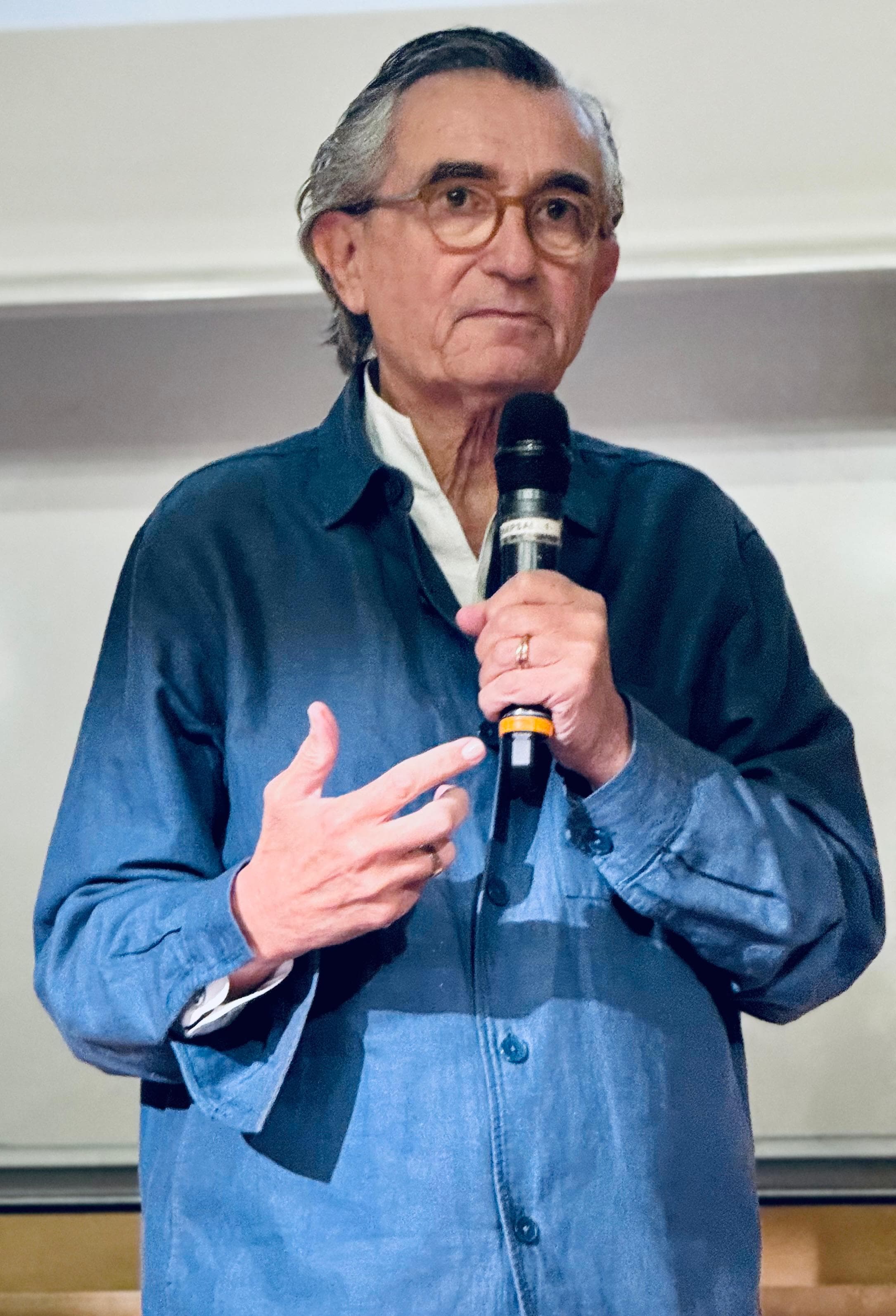
Portrait of Philippe Douste-Blazy

Three major initiatives

UNITAID

Unitaid

It all started with a discussion with President Chirac, who was the first to grasp how unsustainable it was for rich countries to keep getting richer while poor countries remained poor. The gap between the two was already becoming increasingly wide in the early 2000s. To bridge this gap, we decided, together with President Lula, to look for new sources of financing for development. A report was therefore commissioned from Jean-Pierre Landau, in which many ideas for new sources of funding were put forward. The idea of levying one euro per airline ticket was selected. Thus, together with President Chirac, we created UNITAID.

Founded in 2006 by a group of visionary countries—France, Brazil, Chile, Norway, and the United Kingdom—UNITAID is the first blueprint for a global solidarity tax: a small, painless contribution for each individual, but made by a multitude of people. We used this funding to treat the poorest, in particular by making it possible for the most disadvantaged populations to access new medicines that had previously been reserved for rich countries. This is the only way to help address the world’s greatest global health challenges, notably HIV, tuberculosis, malaria, and the health of women and children.

The organization invests in innovative solutions to reshape markets, whether for medicines, diagnostic tests, or medical devices. Its sole objectives are to reduce costs, ensure that poor populations have access to the same quality as the wealthy, and guarantee supply everywhere.

320

million people use Unitaid-supported products every year

100+

groundbreaking products introduced since 2006*

186

million additional instances of illness/disease averted by 2030

930 000

additional lives saved

10$ bn

in savings by 2030

46$

back for every $1 invested

* Most notably, UNITAID developed the first and only paediatric anti-HIV medicines, making it possible to treat 8 out of 10 children worldwide living with AIDS between 2006 and 2009.

MEDECINES PATENT POOL

Medecines Patent Pool

I wanted to create the Medicines Patent Pool (MPP) because I found it unbearable that the newest, most effective, and therefore most expensive medicines were reserved for people in wealthy countries, while those in the poorest countries had to wait 10 to 15 years before having a chance to access them in generic form. To me, it felt like letting millions of people die — a blatant failure to help those in danger. After working with NGOs, especially Médecins Sans Frontières, I put the creation of the MPP to a vote at the UNITAID board in 2010. That's how the MPP was born.

The MPP is a public health organisation working to increase access to and facilitate the development of life-saving medicines for low- and middle-income countries (LMICs). Through its innovative business model, MPP partners with patent holders and generic manufacturers to negotiate licences that allow for the development and distribution of affordable treatments. MPP's approach not only facilitates access to existing treatments but also supports the development of new formulations and health technologies. This scalable model promotes long-term sustainability and empowers local health systems. UNITAID continues to be MPP's main funder.

43.56

billion doses supplied since 2012

1.9$ bn

saved (2012–2023)

170 000

deaths averted projected by 2030

56

generic partners across 14 countries

22

patent holders engaged in voluntary licensing

118

million patient-years of treatment delivered

UNITLIFE

Unitlife

In 2018, I realized that chronic malnutrition was one of the greatest threats to humanity, a threat almost entirely unknown not only to the general public but also to heads of state and government. One hundred forty-eight million children suffer from it. These children experience stunted growth, weakened immune systems with frequent infections that explain their low life expectancy, cognitive deficits, and psychomotor delays that become permanent after the age of three. The long-term consequences are therefore devastating, affecting health, learning, and productivity. This condition silently and insidiously erodes the human capital of the poorest countries. Forty percent of their populations are affected. Moreover, climate change is accelerating the risk of this condition: droughts alone increase it by nearly 50%.

This is why I created UNITLIFE, thanks to President Macron and His Highness Sheikh Mohamed Bin Zayed, then presidents of France and the United Arab Emirates. As with UNITAID, I wanted UNITLIFE to be hosted by the United Nations. UNITLIFE is the UN trust fund dedicated exclusively to financing maternal and child nutrition through innovative financing mechanisms. Since 2005, with the arrival of the Children’s Investment Fund Foundation—chaired by Sir Christopher Hohn—on the board, we decided that this scourge should be tackled by creating new sources and mechanisms of financing (debt swaps, blended finance and matching funds, innovative levies and domestic instruments, etc.).

A political fight

I affirm that a just and peaceful globalization will only be possible if all human beings, without exception, have access to the following 5 global public goods:

Nutrition
Safe Drinking Water
Primary Healthcare
Education
Sanitation

While the globalization of the economy and communication has long been a reality, the globalization of solidarity remains to be built. UNITAID demonstrates that painless micro-contributions from globalized industries allow millions of travelers and consumers to finance vital programs for families affected by extreme poverty, without even realizing it.

Learn more

Where there's a will, there's a way.

Philippe Douste-Blazy

In the media

Euronews

Euronews Interview – Financing development in times of crisis (2014)

Television interview explaining how solidarity levies like the airline ticket contribution behind UNITAID can keep supporting development even during economic downturns.

Read the piece →

Huffington Post

Open letter on the Robin Hood tax (2012)

Huffington Post op-ed urging France and the European Union to adopt a financial transaction tax and allocate part of the proceeds to the fight against poverty and epidemics.

Read the piece →

Le Temps

"Unitaid, a development laboratory" (2014)

Interview with Swiss daily Le Temps detailing UNITAID's founding alliance and the results achieved for children living with HIV, malaria and tuberculosis.

Read the piece →

Forbes

Profile – A workable solution to world poverty (2014)

Forbes portrait presenting Philippe Douste-Blazy as a driving force behind innovative financing tools that can mobilise billions without burdening citizens.

Read the piece →

Reuters

Reuters feature on UNITLIFE (2014)

Newswire story describing efforts to create UNITLIFE, a United Nations fund powered by micro-levies on extractive industries to combat child malnutrition.

Read the piece →

Le Figaro

Philippe Douste-Blazy: "Chronic malnutrition is a global scourge" (2020)

Interview with Le Figaro on the devastating impact of chronic malnutrition and the need for global action.

Read the piece →

Le JDD

Philippe Douste-Blazy: "Micro-donations can eradicate the scourge of chronic malnutrition"

Op-ed in Le JDD advocating for micro-donations as a powerful tool to fight malnutrition.

Read the piece →

Le Télégramme

Douste-Blazy: "We must move beyond selfishness"

Le Télégramme interview calling for a shift away from national selfishness towards international solidarity.

Read the piece →

Paris Match

Africa, medicines, Unitaid... Douste-Blazy against AIDS

Paris Match feature on Philippe Douste-Blazy's fight against AIDS in Africa through Unitaid.

Read the piece →

L'Usine Nouvelle

"Convincing the pharmaceutical industry is a daily battle"

Interview with L'Usine Nouvelle on the challenges and successes of negotiating with the pharmaceutical industry.

Read the piece →

Jeune Afrique

Philippe Douste-Blazy: "Two billion people lack access to medicines, it's shameful"

Jeune Afrique interview highlighting the inequality in access to medicines.

Read the piece →

Sources

A selection of key works, academic publications and official links documenting Philippe Douste-Blazy's career and initiatives.

Books

  • 1998 – Pour sauver nos retraites. Paris: Plon.
  • 2000 – Le profit partagé. Paris: Plon.
  • 2007 – Des affaires pas si étrangères. Paris: Odile Jacob.
  • 2010 – Power in Numbers (with David Altman). New York: PublicAffairs.
  • Preview on Google Books

Academic articles

  • Effect of fenofibrate on lipoprotein particles predictive of coronary atherosclerosis (1980s). In Drugs Affecting Lipid Metabolism.
  • Cardiovascular risk factors in the MONICA-France registries (Strasbourg and Toulouse). Revue d'Épidémiologie et de Santé Publique.
  • Oslo Ministerial Declaration: global health – a pressing foreign policy issue of our time. The Lancet, 2007.

Op-eds and press

  • 2009 – A tiny tax could do a world of good. The New York Times.
  • 2010 – A Few Dollars at a Time (with David Altman). Foreign Affairs 89(1).
  • 2015 – An Invisible Way to End Poverty. Huffington Post.
  • 2014 – Les quatre idées fausses sur Ebola. Le Figaro.

Official links

  • https://unitaid.org
  • https://medicinespatentpool.org/

© 2025, Philippe Douste-Blazy. All rights reserved. Legal Notice